


Process Engineering & Maintenance
Turning Manufacturing Challenges Into Process Excellence
We help industrial companies design, optimize and standardize manufacturing processes through practical industrial experience between Europe and China.
At FactoryUniC, we share practical process engineering and maintenance knowledge based on real manufacturing experience between Europe and China, helping companies optimize production processes, improve equipment reliability, reduce operational losses and achieve more efficient factory performance.

Process Engineering
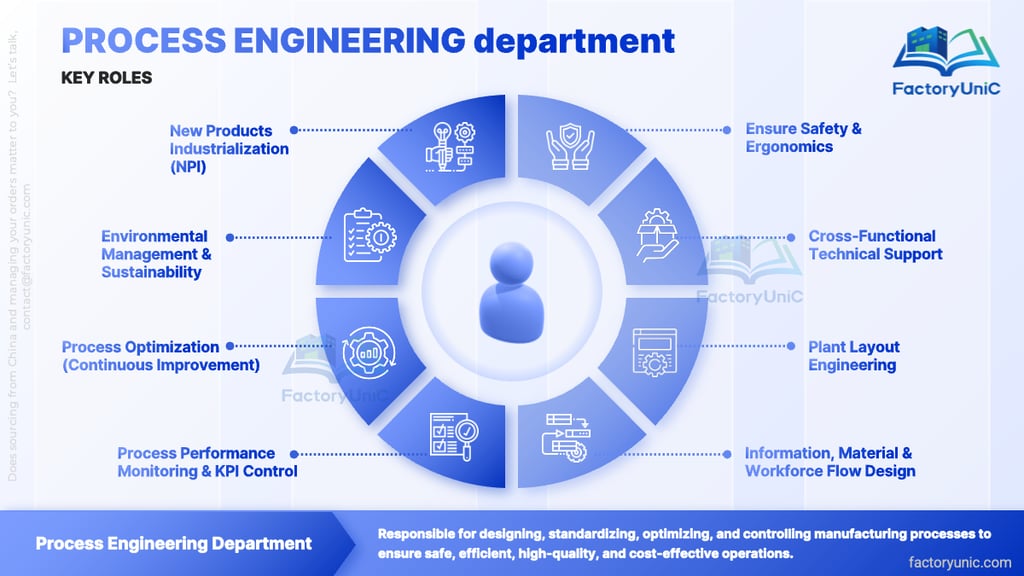
Process Engineering Department - Roles
Process Engineering | Roles
The Process Engineering Department is responsible for designing, optimizing, standardizing, and continuously improving manufacturing processes to achieve operational excellence. In simple terms: they define HOW the product is made, step by step, in the best possible way.
Main Functions of a Process Engineering Department:
New Products Industrialization (NPI). Transform product designs into stable, manufacturable, repeatable, and scalable production processes.
Define the manufacturing flow (sequence of operations)
Define cycle times, takt time and production capacities
Design manufacturing lines (cell, assembly line)
Select machines, tools, and manufacturing technologies
Define jigs, fixtures, and poka-yoke systems
Develop SOPs (Standard Operating Procedures)
Define process parameters
Process Optimization (Continuous Improvement). Improve productivity, eliminate waste, reduce process variation, and lower manufacturing costs.
Implement Lean Manufacturing initiatives (8 Wastes, 5S, Kaizen, VSM, SMED, etc
Implement M&T.
Balance workloads between stations
Identify and eliminate bottlenecks
Plant Layout Engineering
Design and optimize the full plant layout to maximize space utilization, safety, productivity, and future scalability.
Design and optimize production, warehouse, logistics, QC, office, and maintenance areas
Define line positioning and workstation arrangement
Ensure safe pedestrian, forklift, and AMR/AGV routes
Support plant expansion and capacity growth plans
Material, Information & Personnel Flow Definition
Improve the flow of materials, information, and personnel across the plant to reduce waste, lead time, and operational inefficiencies.
Optimize material flow from receiving to finished goods dispatch
Define operator movement and walking routes
Define internal logistics and supermarket replenishment flow
Define information flow between planning, production, quality, and warehouse teams
Cross-Functional Support
Provide technical support to Product Design
Assess manufacturability and production feasibility
Participate in DFMA (Design for Manufacturing & Assembly) reviews
Provide technical support to Production
Train operators on SOPs and standard work
Support trial runs and pilot builds
Provide technical support to Quality
Support root cause analysis (8D, QRQC)
Support PFMEA (Process Failure Mode & Effects Analysis)
Support Internal and External Audits.
Provide technical support to Maintenance
Support preventive maintenance plans
Process Monitoring & KPI Control. Monitor process performance and identify improvement opportunities through data-driven analysis.
Track Cycle time
Monitor OEE (Overall Equipment Effectiveness)
Track FPY (First Pass Yield)
Monitor Scrap and Rework rates.
Analyze Productivity and Labor efficiency.
Safety & Ergonomics
Ensure all manufacturing processes are safe, compliant, and ergonomically optimized for operators.
Identify operational risks and unsafe condition
Conduct process risk assessments
Improve Workstation ergonomics (posture, movement, load handling)
Support compliance with H&S standards
Environmental Management & Sustainability
Ensure manufacturing processes comply with environmental regulations and continuously improve sustainability performance across the plant.
Identify environmental risks and impacts of processes
Ensure compliance with environmental regulations and standards (e.g., ISO 14001, local legal requirements)
Support recycling and waste segregation programs
Manage hazardous substances and disposal processes
📫 If you want to work with Chinese manufacturers that carefully consider the quality of their products, or If you have any questions about this topic, please don’t hesitate to contact us at contact@factoryunic.com. We’ll be happy to assist you.
Process Engineering Department
Plant Layout Design - Factors to consider
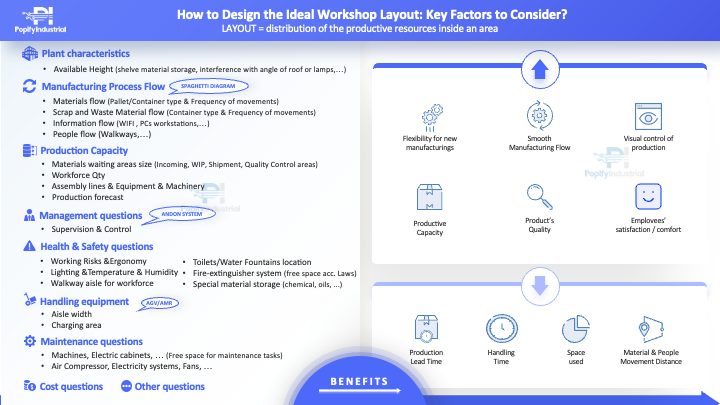

QUESTIONS to CONSIDER TO DESIGN A GOOD WORKSHOP LAYOUT?
Objectives of a Good Layout
Minimize equipment investment and production time
Maximize space utilization
Ensure worker safety and comfort
Reduce costs related to material handling and storage
What is a Layout?
The layout refers to the physical arrangement of productive resources inside a manufacturing plant. A good layout boosts efficiency, safety, and flexibility across operations...
We will publish this new document in the coming weeks.
Maintenance Department
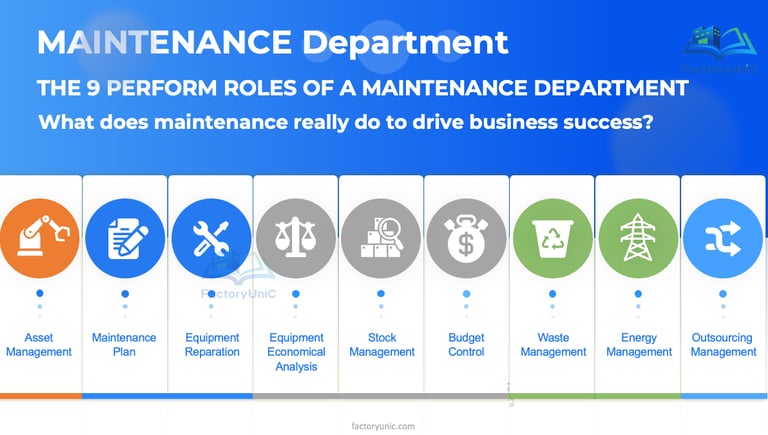
Main Roles of a Maintenance dept.

Maintenance Department – Key Roles & Responsibilities
1. Asset Management. Maintain an up-to-date register of all equipment, machines, and facilities, including technical specifications, location, criticality level, and full maintenance history to support informed decisión-making.
2. Maintenance Strategy & Planning. Define and implement a balanced maintenance strategy (preventive, predictive and condition-based). Prioritize, plan, and schedule tasks based on equipment criticality and production needs to maximize reliability and minimize cost.
3. Corrective & Emergency Repairs. Respond rapidly and efficiently to equipment failures or underperformance. Minimize downtime (MTTR) and ensure continuity of operations through swift diagnostics and repairs...
We will publish this new document in the coming weeks.