


Operations Management
Turning Industrial Challenges Into Operational Excellence
We help industrial companies analyze operations, identify improvement opportunities and implement practical solutions based on real manufacturing experience between Europe and China.
At FactoryUniC, we share practical management documents and industrial insights based on real business and manufacturing experience. Explore the materials below to discover ideas that can help your company improve operations, strengthen leadership and make better industrial decisions.

Management
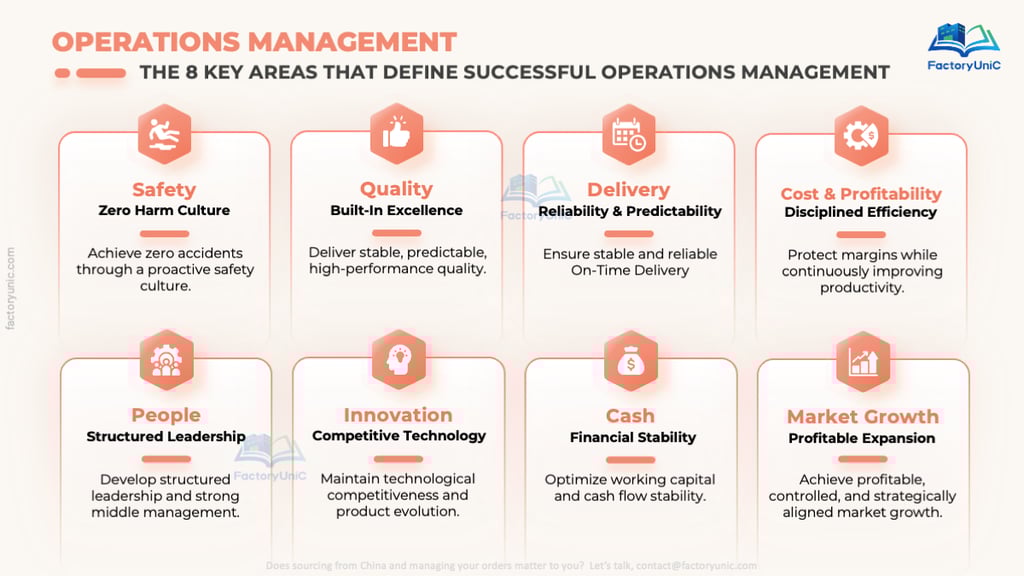
Operations - The 8 key areas that define successful Operations managment
OPERATIONS | THE 8 KEY AREAS THAT DEFINE SUCCESSFUL OPERATIONS MANAGEMENT
The Operations Department must maintain constant focus on the following eight fundamental strategic areas.
1. Safety. Safety is the highest priority in any responsible industrial organization. Protecting the physical integrity and well-being of every employee is non-negotiable. It goes beyond regulatory compliance; it requires building a culture where risks are proactively identified, controlled, and eliminated.
2. Quality. Quality must not be inspected at the end; it must be built into the process. Stable processes, clear standards, and systematic root cause elimination are essential to ensure customer satisfaction and protect the company’s reputation.
3. Delivery Deadlines. Meeting commitments builds trust and strengthens market positioning. Reliable delivery performance reflects effective coordination between planning, purchasing, production, and logistics.
4. Project Cost and Profitability. Executing projects is not enough; they must be profitable. Cost control, productivity, and waste elimination are critical to protect margins and ensure long-term business sustainability
5. People. Processes do not improve themselves; people improve processes. Developing middle management, investing in continuous training, and fostering a culture of accountability are key to disciplined and consistent execution.
6. Innovation in Products and Services. Innovation is essential, but it must be industrially disciplined. New developments must be scalable, manufacturable, and aligned with operational capacity to avoid negative impacts on quality and cost.
7. Financial Stability. Efficient management of working capital, inventory, and investments ensures liquidity and growth capacity. Financial stability enables the organization to execute strategy with confidence.
8. Commercial Performance. Operations and sales must be aligned. Commercial growth is only sustainable when production capacity, quality, and resources are fully prepared to support it.
Each of these areas requires discipline, structure, and continuous monitoring.
Business success does not depend on optimizing a single factor, but on maintaining balance across these eight pillars. When one weakens, the entire system feels the impact; when they are aligned, the organization becomes stable, profitable, and ready for sustainable growth.
📫 If you're looking for Chinese manufacturers of high-tech products or you have any questions about this topic, please don’t hesitate to contact us at contact@factoryunic.com. We’ll be happy to assist you.
Operations Management
Sales Forecasting


WHY SALES FORECASTING IS THE BACKBONE OF FACTORY OPERATIONS
Anticipating future demand is essential to maintaining the right balance between supply and market needs. An accurate sales forecast guides every department, supports better decision-making, and enables the company to prepare proactively rather than react to problems. Here is how a reliable forecast benefits each department:
PURCHASING & SOURCING DEPARTMENT
Inventory Planning & Control. If you know how much you’ll sell, you know how much raw material to buy, avoiding overstocking or shortages. If demand drops and you don't forecast it, you might end up with months of unused components.
Supplier Negotiation. Better volume visibility = better price deals. Committing to a supplier with accurate volume projections can unlock discounts.
Supplier Relationship. Good forecasts build trust and long-term reliability with your vendors. Sharing your forecast helps suppliers plan their production, improving delivery performance too.
Transportation Costs. Forecasting allows for consolidated shipments, reducing freight costs. For example, instead of 4 urgent deliveries, one planned bulk order can save thousands.
Lead Time and Supply-Risk Management. Anticipating needs early allows for smarter scheduling of orders. Early visibility is especially important for long-lead-time and high-risk components. It gives the company time to secure supply, qualify alternatives, or adjust safety stock.
FINANCIAL DEPARTMENT
Budget Planning. Assists in creating realistic budgets for labor, inventory, equipment, facilities and other operational expenses, ensuring financial stability and long-term financial plans. For example: Budgeting for new machinery is safer when future demand is clear.
Cash Flow Management. Helps manage it by predicting incoming revenue and planning expenses accordingly.
Strategic Decision Making. Enables profitability analysis by product, product line, or market segment, helping to take critical financial decisions, such as investments and cost-cutting measures. For example: Postponing a warehouse expansion if forecasted volumes drop._
Risk Assessment & Control. Identify slow seasons or market shifts early. It allows to define mitigation strategies, such as product or market diversification.
PRODUCTION & PROCESS ENGINEERING DEPARTMENT
Production Schedule. Production can plan shifts, work orders, and line capacity around expected demand, reducing last-minute changes, overtime, and idle resources. For example: If the third quarter forecast spikes, you can plan extra shifts in advance._
Operational Flexibility. When demand changes, the factory can adjust staffing, batch sizes, schedules, and inventory policies in a controlled way.
Finished Goods Stock. Ensures that the final product inventory is in sync with sales projections, reducing excess stock and stockouts. Don’t produce more than you can sell.
Resource Allocation. Assign staff, machines, and materials to the right place at the right time. Plan vacations or maintenance during slower periods.
Tooling, fixtures, and work instructions. Process engineering can prepare fixtures, validate cycle times, update work instructions, and complete PFMEA actions before volumes increase.
Maintenance Planning and Plant Downtime. Schedules maintenance activities during low-demand periods, avoiding disruptions during peak times. Downtime is less costly when it aligns with low demand.
LOGISTICS & WAREHOUSE DEPARTMENT
Transportation Cost & Routing Plans. With known demand, shipping routes can be consolidated and optimized. For example: Plan full truckloads instead of costly LTL (Less-Than-Truckload) shipments.
Warehouse Operations Management. Optimizing storage space, staffing, and stock levels better. Avoid emergency warehouse expansions by forecasting seasonal peaks.
Packaging Material. Packaging materials, can be planned before customer demand peaks.
SALES DEPARTMENT
Target Setting. Sets realistic sales goals, providing clear targets for the sales team to keep them focused and motivated.
Sales Strategy. Guide your promotions and pricing based on demand forecasts. Run discounts only when excess stock is predicted.
IMPACT ACROSS ALL DEPARTMENTS
Sales forecasts are crucial for the optimization the allocation of resources and to maximize operational efficiency.
BTW, it's interesting to have a forecast with different scenarios: common, worst, and best case scenarios. This approach allows for more flexible and comprehensive planning, ensuring the company is prepared for various potential outcomes.
Operations Management
Factory Location: Where you should put your factory?


Choosing the Right Factory Location
A practical method for comparing industrial sites on cost, capability and risk
Let’s get to the point. You can have the best product in the world. A product so pretty it could win design awards. But if you put your factory in the wrong place, you're screwed. This isn’t about finding a cheap spot with nice views. This is a strategic decision, the kind that can make or break your business. Here’s what really matters when choosing where to build your factory.
Operations & Supply Chain Considerations
Transport Infrastructure: Good access to roads, ports, airports and logistics networks for raw material supply and product distribution.
Nearby Suppliers: Proximity to key suppliers to reduce transport costs, lead times, inventory, supply-chain risk and easy management.
Proximity to Main Customers & Markets: Reducing delivery time and transportation costs and improve responsiveness.
Certification & Approvals: Cost and time for getting or renewing ISO, CE, and other industry certifications, permits and product approvals.
Customer Homologation: Ensuring certifications and approvals are transferable to the new location.
Energy Costs: The cost and availability of electricity and other utilities.
Weather & Natural Environment: Climate conditions that may affect production and logistics.
Expansion Capacity: The site could support future production growth, warehouse expansion and additional equipment.
Human Resource Considerations
Ease of Recruitment: Availability of skilled and unskilled labor in the area.
Labor Costs & Wage Market: Salary expectations and legal requirements for employees.
Local Community Support: The attitude of the local population towards industrial businesses.
Working Environment: Safety regulations and employment conditions.
Union Influence: The presence of strong labor unions and their impact on labor negotiations.
Administrative & Financial Considerations
Land & Facility Costs: Expenses for purchasing or leasing land and building or renting the factory.
Local Laws & Regulations: Compliance with environmental and business laws.
Taxation Policies: Corporate and industrial taxes applicable in the region.
Permits & Approvals: Time and steps to obtain construction, environmental, fire-safety and operating permits.
Government Incentives: Subsidies, tax breaks, and grants for businesses.
International Factors (for Foreign Locations)
Political Stability: Risk of instability affecting operations.
Economic Climate: Currency value, inflation rates, and local economic conditions.
Exchange Rate: Impact of fluctuating exchange rates on profits.
Customs Policies: Import/export regulations and tariff barriers.
Intellectual Property Protection: Consider how effectively local laws protect designs, software, technology and manufacturing know-how.
The most suitable factory location is not always the one with the lowest immediate costs but rather the one that ensures long-term profitability and operational efficiency.
Planning an industrialization project in China? FactoryUniC helps turn your manufacturing plans into operational reality. Contact us at contact@factoryunic.com.

Management
Strategy I - Fixed Costs To Variable Costs
MANAGEMENT | Converting Fixed Costs into Variable Costs: The Strategic Shift That Powers Agile, Profitable Growth
In a business world that’s moving faster than ever, the most successful companies are those that align their cost structures with their dynamic strategies. Converting fixed costs into variable costs is a game-changing strategy that offers flexibility and keeps businesses competitive.
What are we talking about?
Fixed costs are expenses that do not change with the level of goods or services that a company produces, such as the renting of a building. On the other hand, variable costs are those that fluctuate with production, such as energy usage, raw materials and transportations.
Why is it important?
Converting fixed costs into variable costs gives companies a strategic advantage:
You become more adaptable to demand changes.
You reduce sunk costs and exposure during downturns.
You can reinvest more confidently during growth cycles.
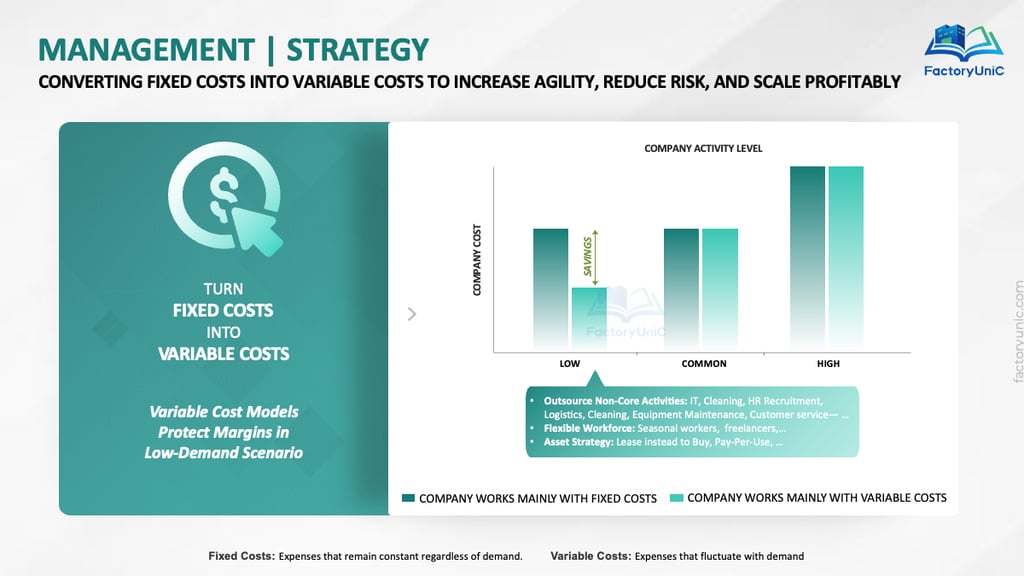
In the attached graph, we can see a clear representation of how changing fixed costs to variable is a strategic move that can lead to significant financial benefits.
How can Companies make the shift?
Outsourcing Non-Core Activities. Focusing on your core business while outsourcing non-essential functions—such as IT, logistics, cleaning, equipment and machinery maintenance, logistics, recruitment or customer service—allows you to pay for services only as they are needed. This strategy turns fixed costs, like internal team salaries, into variable costs tied to service usage.
Utilize Temporary Staffing & Freelancers. Instead of hiring full-time employees for every role, consider flexible staffing options, including temporary employees or freelance talent. This provides the flexibility to scale the workforce up or down based on current business needs.
Lease Instead of Buy & Implement "Pay-per-Use" Models. Whether it's office space, equipment, or technology, leasing allows your business to remain nimble, adapting quickly to new opportunities and challenges without heavy capital investment. Additionally, "Pay-per-Use" models for services or equipment enable you to pay only when you need resources, keeping costs aligned with your business activities.
The strategy of changing fixed costs to variable costs is not just about saving money. It's about gaining flexibility, scalability, and resilience. In an unpredictable market, this strategy could be the difference between thriving and merely surviving.
📫 If you're looking for manufacturers of high-tech products or you have any questions about this topic, please don’t hesitate to contact us at contact@factoryunic.com. We’ll be happy to assist you.

Management
Napoleon Hill
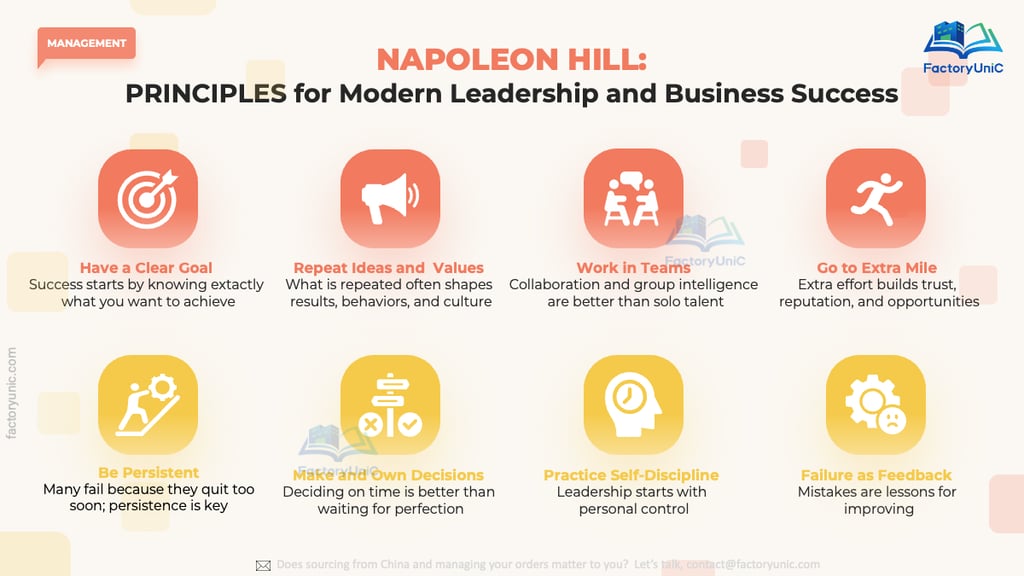
management - Napoleon Hill | Principles for Modern Leadership and Business Success
Napoleon Hill did not write only to motivate people. He created a clear system to help people achieve goals, lead others, and take action on purpose. His ideas are still useful today, especially in organizations where success depends on clear direction, good decisions, and teamwork.
Below are eight core principles translated into clear leadership and business practices.
1. Clear and Definite Purpose: Direction Before Action.
Success starts with clarity. Without a defined objective, effort becomes scattered and ineffective. A vague goal produces vague results. In business, goals must be specific, measurable, time-bound, and owned. When leaders communicate purpose clearly, teams understand priorities, make better decisions, and align daily actions with strategic objectives.
2. Repetition and Autosuggestion: Culture Is Built by Consistency.
What is repeated strengthens belief and behavior. When people repeat goals and values, they begin to think and act in line with them. In organizations, culture is built by what leaders say and do again and again. What leaders repeat, and allow, becomes normal behavior for the team. What is repeated daily becomes part of the culture.
3. The Mastermind Principle: Collective Intelligence Wins.
Hill rejected the idea that success comes from one person alone. He believed that working with others makes everyone stronger. Today, strong leaders build teams where people with different skills work together. Teams that share ideas and responsibility usually perform better than individuals working alone.
4. Going the Extra Mile: Do More Than What Is Required.
Success often comes from doing more than what is asked. Extra effort builds trust and creates opportunities. People that go beyond basic expectations earn respect, loyalty, and a good reputation. Extra effort creates extra value.
5. Persistence and Resilience: Endurance Creates Advantage.
Persistence is the ability to keep going even when things are hard. Many plans fail not because they are bad, but because people give up too soon. Success often comes after difficulties.
6. Decision-Making: Speed with Responsibility
Successful people make decisions quickly and change them only when needed. Fear often causes people to delay decisions. In business, momentum matters. A timely, well-owned decision moves the organization forward. Waiting for perfection usually costs more than acting with discipline.
7. Self-Discipline: Lead Yourself First.
Leaders must control themselves before leading others. This includes emotions, time, and behavior. Teams do not follow instructions; they follow examples. A leader’s behavior sets the standard for the entire organization. Discipline at the top creates discipline throughout the system.
8. Failure as Feedback: Learning Is the Competitive Edge.
Failure is not the end unless you quit. Every mistake can teach something useful. Organizations and people that learn from mistakes improve faster and become stronger. Failure helps improve the plan, not destroy it. Failure is a lesson, not a stop sign.
📞 Sourcing from China and managing your orders matter to you? Let’s talk. contact@factoryunic.com


Management
Jim Rohn
management - Napoleon Hill | Principles for Modern Leadership and Business Success
“You are the average of the five people you spend the most time with,” a quote by Jim Rohn, delivers a simple yet powerful truth: your environment is shaping you every day. The people around you influence how you think, what you believe is possible, and the standards you choose to accept. Mindset, habits, ambition, and even confidence are contagious. When your circle is driven by growth, discipline, and solutions, your own level rises naturally. Choosing who you spend time with isn’t just a social choice, it’s a strategic decision about your future.
📞 Sourcing from China and managing your orders matter to you? Let’s talk. contact@factoryunic.com

Management | Story
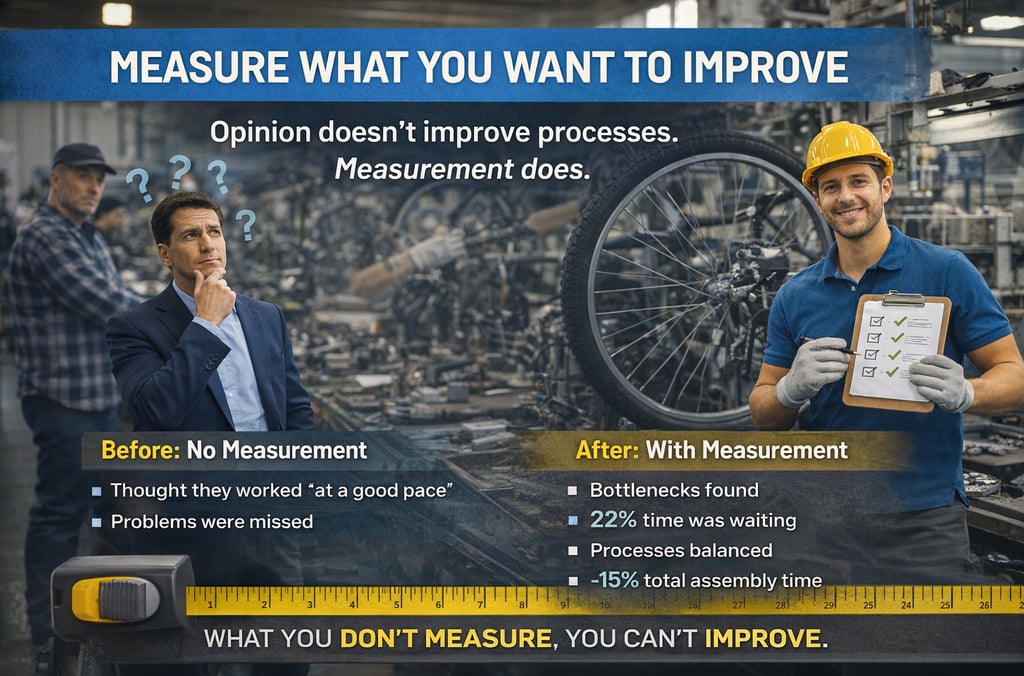
Measure What You Want to Improve
OPERATIONS | WITHOUT MEASUREMENT, THERE IS NOT IMPROVEMENT
Here’s a short, realistic story I’ve seen play out in many manufacturing plants.
A simple story. But an uncomfortable one.
Because it puts a hard truth on the table: If we’re not measuring, we’re just giving opinions. And opinions don’t improve processes.
In a small bicycle manufacturing plant, the owner was proud that his operators worked “at a good pace.” There were no stopwatches. No recorded cycle times. No scrap tracking. Everything was done “the way we’ve always done it,” relying on the team’s experience.
One day, a key customer asked whether they could shorten the delivery time by one week. The owner replied confidently: “We work fast. I’m sure we can.”
But when they tried to speed up production, reality showed up: parts were missing at critical moments, some operators overlapped tasks, others were waiting on materials without realizing it, and assembly errors increased under pressure.
The order was delayed. The customer walked away.
Frustrated, the owner hired a young engineer who started with something very simple: measurement: he measured cycle times, the waiting time, the defects by workstation., the rework and the work-in-process inventory, among others.
Within a few weeks, the data told the story: 22% of total production time was pure waiting, two stations were creating bottlenecks and a small change in sequencing reduced total assembly time by 15%.
The owner, surprised, asked: “Was all of this happening right in front of us?”
The engineer replied: “It was always there. You just couldn’t see it. What doesn’t get measured doesn’t get seen. And what doesn’t get seen doesn’t get improved.”
📫 If you're looking for manufacturers of high-tech products or you have any questions about this topic, please don’t hesitate to contact us at contact@factoryunic.com. We’ll be happy to assist you.
Operations Management
Delivery On-Time - Risks Analysis
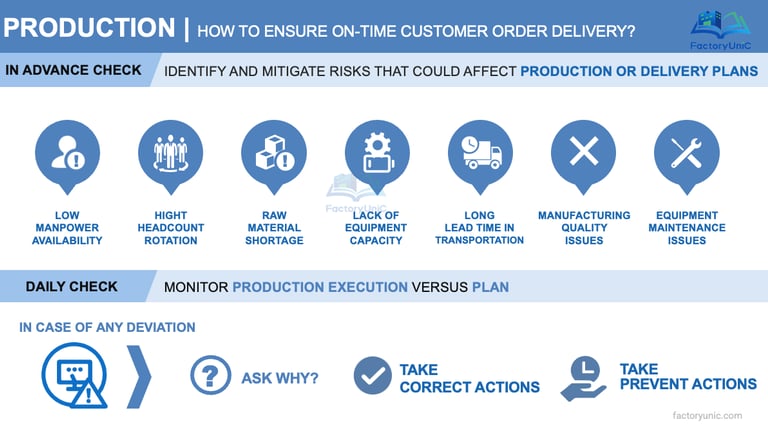

ON-TIME CUSTOMER DELIVERY: HOW OPERATIONS EARN (OR LOSE) TRUST
Let’s be clear:
Missing a delivery date is not a minor issue. It’s a breach of trust. And when you break trust in business, you lose customers — sometimes forever.
It doesn’t matter how innovative your product is, how efficient your technology, or how hard your team works. If the customer doesn’t receive what they ordered, when they expected it, nothing else counts.
On-time delivery (OTD) is not just a logistics KPI. It’s a diagnostic — a real-time indicator of how well your entire operation is functioning. From planning to purchasing, from production to quality control and logistics, one weak link can compromise the entire system...
We will publish this new document in the coming weeks.
Management
3 Powerful Quotes Every Manager Should Know
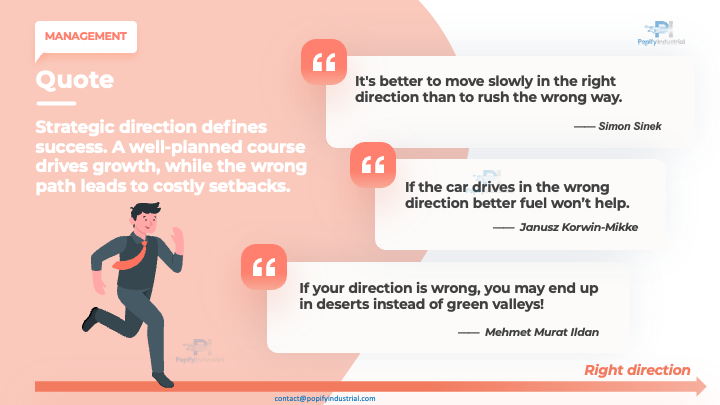

DIRECTION OVER SPEED: WHY STRATEGY MUST COME FIRST
Leaders often find themselves under immense pressure to deliver rapid results. Investors demand quick returns, competitors move aggressively, and market conditions shift unexpectedly.
In this race for success, one critical truth is often overlooked: Direction matters more than speed. Move fast on the wrong path, and you’re just accelerating failure.
The Cost of Moving in the Wrong Direction
Many companies invest heavily in scaling operations, launching new products, or entering new markets without ensuring that their fundamental strategy is sound. This “speed-first” mentality can be catastrophic. Take, for example, companies that expand globally without...
We will publish this new document in the coming weeks.
Management
To be Successfull - Murphy´s Law
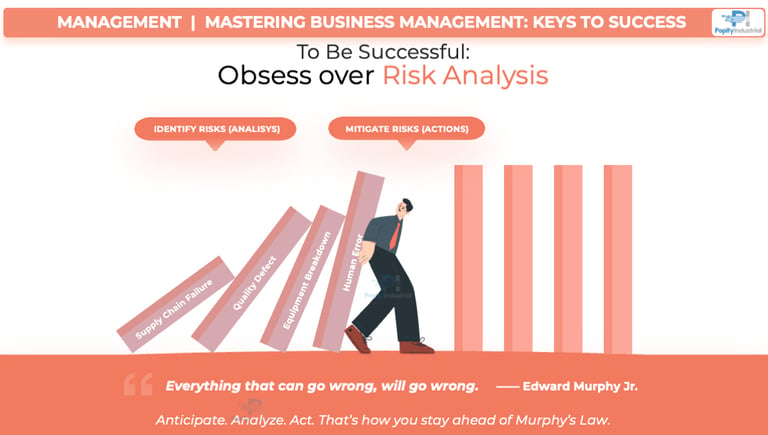

MURPHY’S LAW & RISK ANALYSIS: WHY YOU SHOULD OBSESS OVER IT
"Anything that can go wrong, will go wrong." — Murphy’s Law
This phrase isn’t just pessimism—it's a wake-up call for professionals in quality, operations, and business management. Murphy’s Law reminds us that failure is not a possibility; it’s a certainty—unless we’re prepared.
That’s why the key to success lies in obsessing over risk analysis.
Why Risk Analysis Matters
In business and manufacturing, problems often don’t come one at a time—they come like falling dominoes. If you’re not ready, one failure can trigger a chain reaction...
We will publish this new document in the coming weeks.
Management
To be Successfull - Murphy´s Law
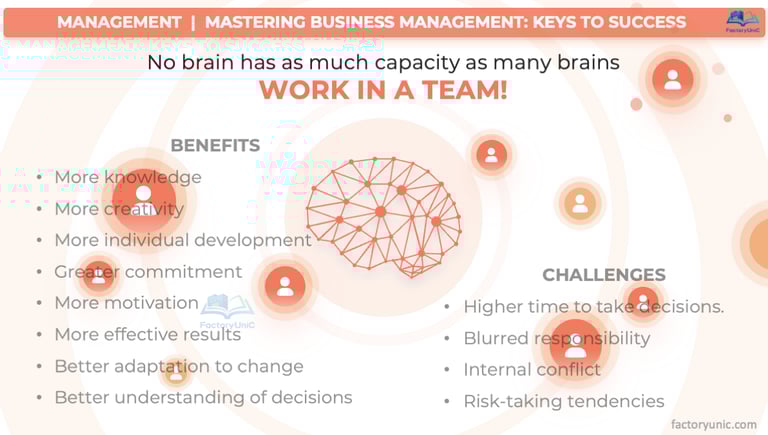

The Key to Industrial Success: Teamwork
In today’s increasingly complex and demanding industrial environment, teamwork has become one of the most valuable competencies within organizations. It is no longer enough to have technically skilled employees; what’s required now is genuine collaboration, coordination, and a collective mindset focused on achieving shared goals.
What is teamwork?
A team is formed when two or more people work together toward a common objective. It’s not simply about gathering individuals—it’s about creating synergy, where the outcome exceeds the sum of individual efforts.
Tangible Benefits of Teamwork...
We will publish this new document in the coming weeks.
Management
Foster Multidisciplinary Teams
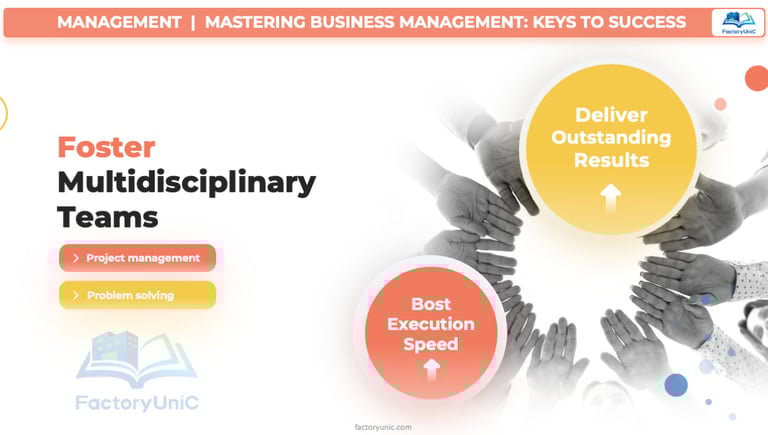

MULTIDISCIPLINARY TEAMS
Let’s be honest: if your business is still operating in silos, you’re burning time, money, and missing key opportunities. Multidisciplinary teams aren’t a buzzword. They’re the difference between businesses that merely cope—and those that lead the way.
What Exactly Is a Multidisciplinary Team?
It’s a team made up of people with different areas of expertise, all working together towards a clear objective.
They don’t clash—they complement each other.
They don’t hide behind their job descriptions—they collaborate and get things done.
Key Advantages
Different minds, better thinking: Bringing together varied perspectives means....
We will publish this new document in the coming weeks.
Management
Task Prioritization (2 slides)
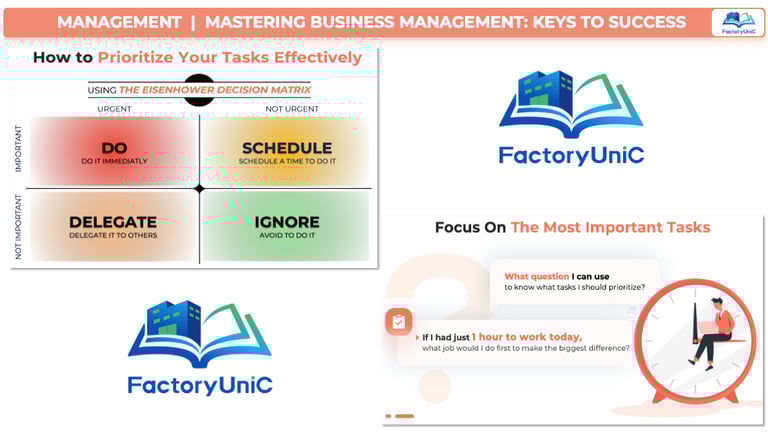

How to Define the Priority of Your Tasks: The Eisenhower Matrix
In our busy lives—whether at work, at home, or while managing multiple responsibilities—it's easy to feel overwhelmed by everything we have to do. But here’s the truth: not all tasks are equally important.
To work smarter and not just harder, one tool stands out for its clarity and simplicity: the Eisenhower Decision Matrix. This method helps you decide what to DO, what to PLAN, what to DELEGATE, and what to IGNORE.
Let’s break it down and learn how you can apply it starting today.
What is the Eisenhower Matrix?
The Eisenhower Matrix is a square divided into four quadrants based on two criteria...
We will publish this new document in the coming weeks.
Management
Darwin´s sentences for Management
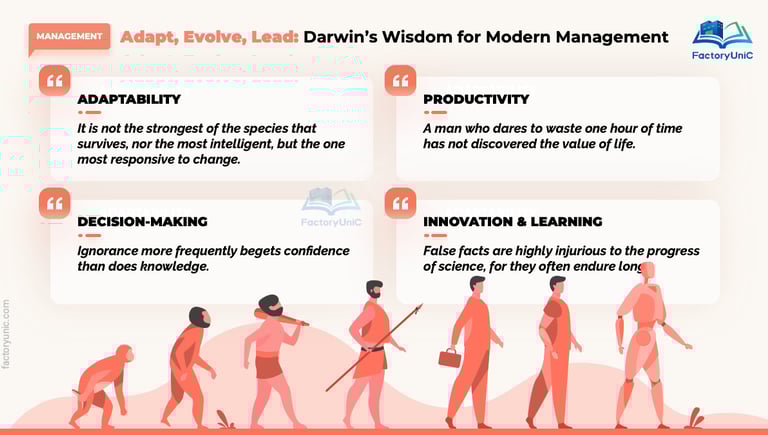

DARWIN IN BUSINESS: 4 LEADERSHIP LESSONS
Adaptability: The Strong Don’t Always Win
“It is not the strongest of the species that survives, nor the most intelligent, but the one most responsive to change.”
Everyone wants to be the “biggest” or “smartest.” But in the business world, that’s not how it works. The ones who adapt survive. The ones who don’t? They’re stuck in the past. The market moves fast—be ready to pivot or be left behind.
👉 Ask yourself: Is your business reacting quickly enough to change? Or are you hoping the world will wait for you?
Innovation: Question Everything
“False facts are highly...
We will publish this new document in the coming weeks.
Management
Keep Moving: Power of Persistence
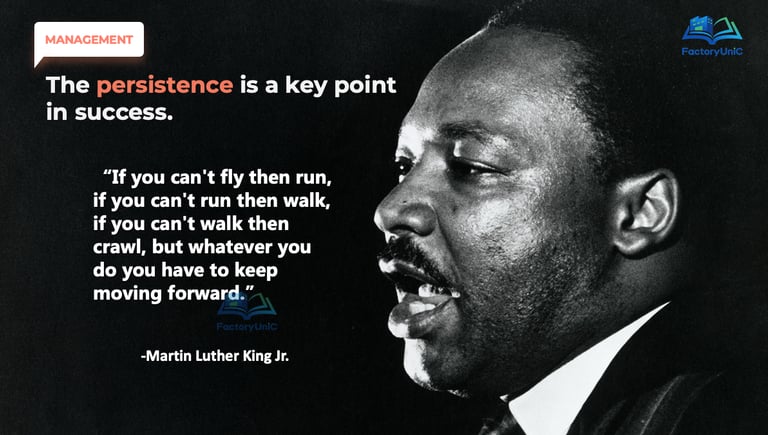

THE real success is built on persistence.
A powerful visual reminder of this comes from a quote by Martin Luther King Jr.:
"If you can't fly then run, if you can't run then walk, if you can't walk then crawl, but whatever you do you have to keep moving forward."
These words carry more than just motivational weight — they hold a philosophy of life and leadership that applies to every endeavor, from personal growth to organizational transformation.
Persistence is the ability to keep going despite obstacles, slow progress, or even repeated failures. It’s not flashy. It’s not immediate. But it is essential. In management, entrepreneurship, innovation, and change leadership, persistence is often the difference between vision and....
We will publish this new document in the coming weeks.

Management
Sales - KPIs
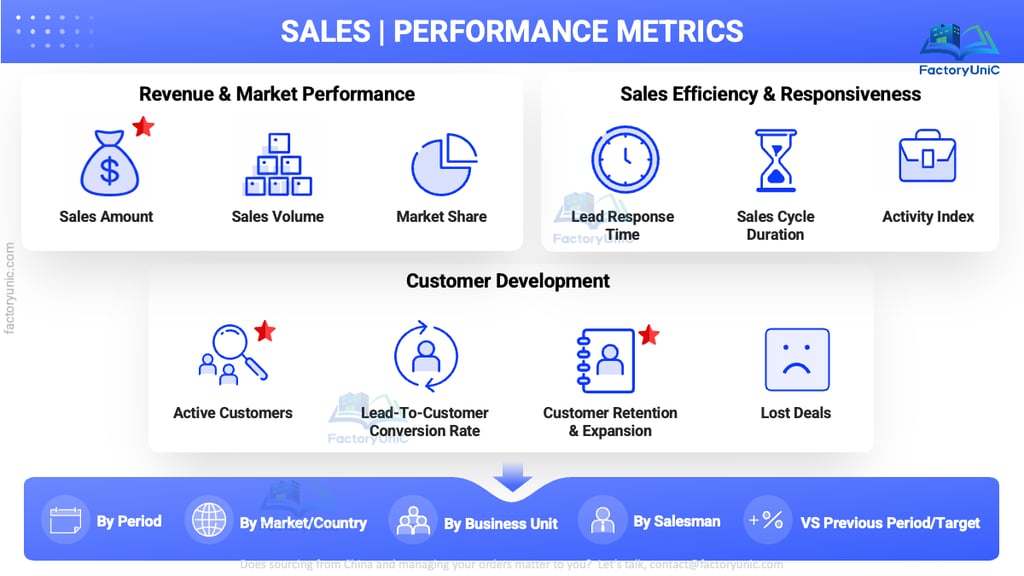
management | SALES - PERFORMANCE METRICS
Revenue & Market Performance
Revenue (Sales Amount). Total turnover and gross margin.
Units Sold (Sales Volume)
Market Share. % within target segments (automotive, logistics, pharma, etc.).
Sales Efficiency & Responsiveness
Lead Response Time。 Average time to first qualified contact.
Sales Cycle Duration。 Average time from lead to purchase order.
Activity Index。 Visits, demos, layouts, quotations issued.
Customer Development
Active Customers。 By customer level, by industry.
Lead-to-Customer Conversion Rate。 % of opportunities converted.
Customer Retention & Expansion。 Repeat purchases.
Risk & Lost Opportunities
Lost Deals Analysis. Due price, delivery time, technical requirements outside our solution scope.
Segment Analysis
By period
By market / country
By business unit
By sales manager
Vs previous period (%)
Vs target (%)
📞 Sourcing from China and managing your orders matter to you? Let’s talk. contact@factoryunic.com