

HUMAN RESOURCES
Capable People. Responsible Employers. More Reliable Suppliers.
Selecting the right supplier is not only about price, technology, production capacity and quality systems. A supplier’s ability to recruit, train, retain and manage its employees directly affects productivity, product quality, delivery reliability and continuous improvement.
During supplier evaluations and factory visits, FactoryUniC pays close attention to workforce organization and human resources management practices. We review areas such as organizational structure, roles and responsibilities, workforce stability, employee turnover and absenteeism, recruitment and onboarding, training, competency management, overtime, internal communication and available employment-related documentation.
We also assess visible evidence that suppliers manage their employees responsibly and follow applicable labor requirements and the specific expectations agreed with our clients. When potential workforce-related risks or management gaps are identified, we report them clearly and can coordinate improvement actions and follow-up directly with the supplier.
This helps our clients reduce operational, quality, delivery, legal, supply-chain and reputational risks when sourcing or manufacturing in China.
Explore Our Human Resources Topics
Below, we share a selection of practical Human Resources topics covering the role of the HR department, recruitment processes, candidate-sourcing methods, workforce KPIs, employee development and other practices that contribute to more stable, capable and high-performing industrial organizations.

Human Resources
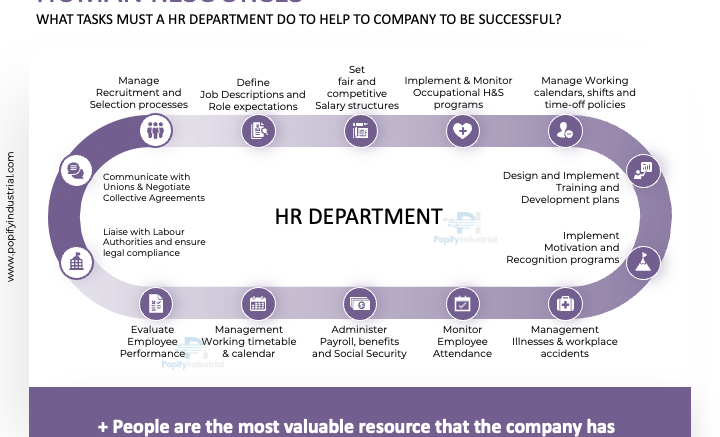
Key Roles for success
THE REAL ROLE OF THE HR DEPARTMENT: BEYOND PAPERWORK AND PAYSLIPS
When we ask, “What does the HR department actually do?” — many still think the answer is limited to hiring, firing, and payroll. But the truth is, Human Resources is at the core of every successful business strategy.
Whether you're leading a startup or managing a global operation, your people are your greatest competitive advantage — and HR is the team that empowers, protects, develops, and supports them every day.
Here’s a look at the true scope of HR responsibilities and how they contribute to business success:
What Does a Modern HR Department Do? ...
We will publish this new document in the coming weeks.
Human Resources
Steps to Hiring Employees
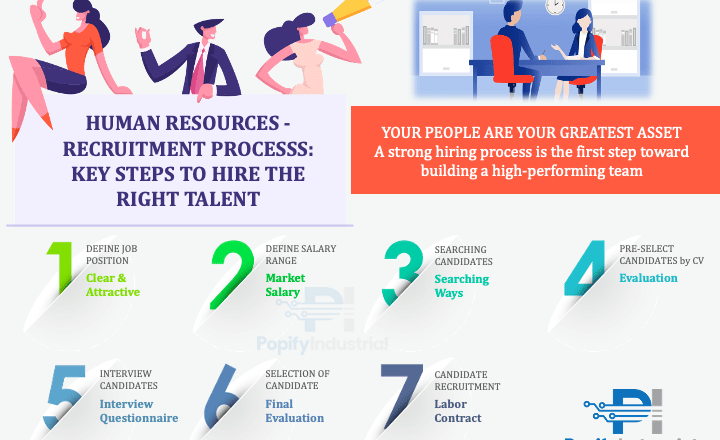

RECRUITMENT PROCESS: KEY STEPS TO HIRE THE RIGHT TALENT
A structured and strategic approach to finding, attracting, and hiring the best people for your company.
7 Essential Steps for an Effective Recruitment Process:
1. Define the Job Role
Write a clear, detailed, and attractive job description outlining responsibilities, qualifications, and expectations. This helps attract the right candidates from the start.
2. Establish a Competitive Salary Range
Benchmark against the market salary to ensure competitiveness and fairness. This increases the chances of attracting top talent...
We will publish this new document in the coming weeks.
Human Resources
Hiring Ways
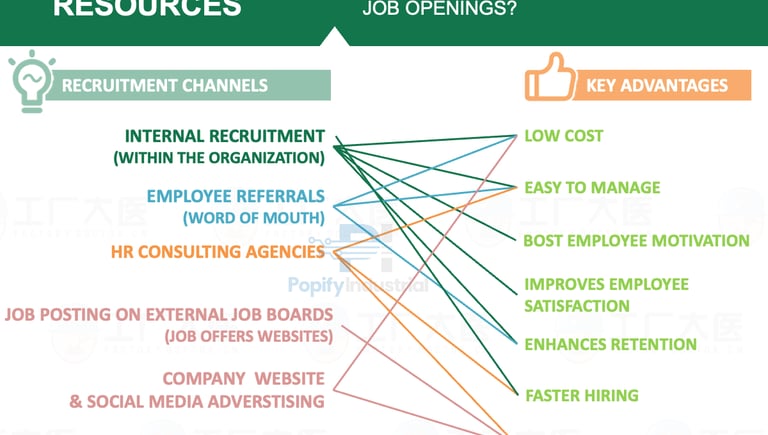

5 WAYS TO FIND THE RIGHT CANDIDATES FOR YOUR JOB OPENINGS
Finding the right people is one of the biggest challenges — and responsibilities — we have in Human Resources. Whether you’re hiring for a growing team or replacing a key role, the search process matters.
Below are 5 effective recruitment channels every company should consider, each with its strengths — and some strategic advantages you might not be tapping into yet.
1️.- Search Within the Organization
Before you look outside, look inside. Promoting internal talent is not only cost-effective and easy to manage, but it also improves employee morale, motivation, and long-term retention.
Your people already know your culture, systems, and expectations.
With the right training plans in place, internal promotion becomes a pipeline for leadership....
We will publish this new document in the coming weeks.
Human Resources
Key KPIs
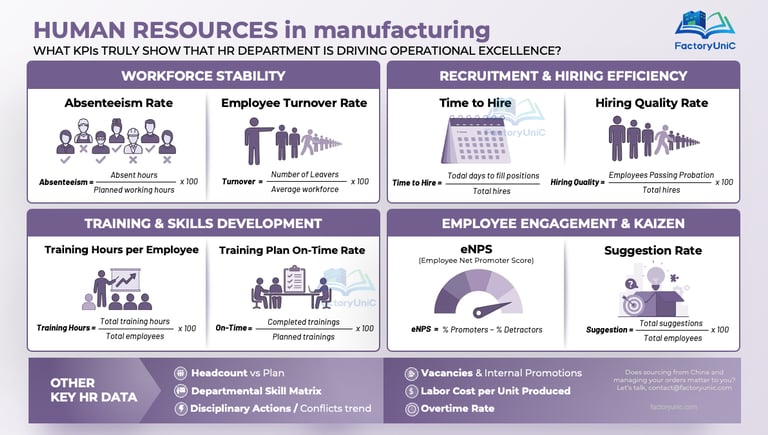

HUMAN RESOURCES | KEY KPIS in manufacturing
This slide highlights the key HR metrics that truly impact operational excellence in manufacturing environments. It focuses on four critical pillars:
Workforce Stability: Monitoring absenteeism and turnover to ensure a reliable and consistent workforce.
Recruitment Efficiency: Measuring time-to-hire and hiring quality to secure the right talent quickly and effectively.
Training & Skills Development: Tracking training hours and execution to build a capable, high-performing team.
Employee Engagement & Kaizen: Using eNPS and suggestion rates to drive continuous improvement and employee involvement.
Additionally, supporting indicators such as skill matrices and overtime provide a complete view of HR’s contribution to productivity and competitiveness.
We will publish this new document in the coming weeks.