
MANAGEMENT
The Management section of FactoryUniC offers a collection of clear, practical resources in PDF and PPT formats, created to help leaders and managers in industrial environments strengthen their skills. The content goes straight to the point, no unnecessary theory, so it can be applied immediately to real challenges on the job. Behind these materials is a team of professionals with more than 20 years of hands-on experience in global industrial operations, ensuring that every insight is grounded in practice, not just concepts.
Management
Strategy I - Fixed Costs To Variable Costs
MANAGEMENT | Converting Fixed Costs into Variable Costs: The Strategic Shift That Powers Agile, Profitable Growth
In a business world that’s moving faster than ever, the most successful companies are those that align their cost structures with their dynamic strategies. Converting fixed costs into variable costs is a game-changing strategy that offers flexibility and keeps businesses competitive.
What are we talking about?
Fixed costs are expenses that do not change with the level of goods or services that a company produces, such as the renting of a building. On the other hand, variable costs are those that fluctuate with production, such as energy usage, raw materials and transportations.
Why is it important?
Converting fixed costs into variable costs gives companies a strategic advantage:
You become more adaptable to demand changes.
You reduce sunk costs and exposure during downturns.
You can reinvest more confidently during growth cycles.
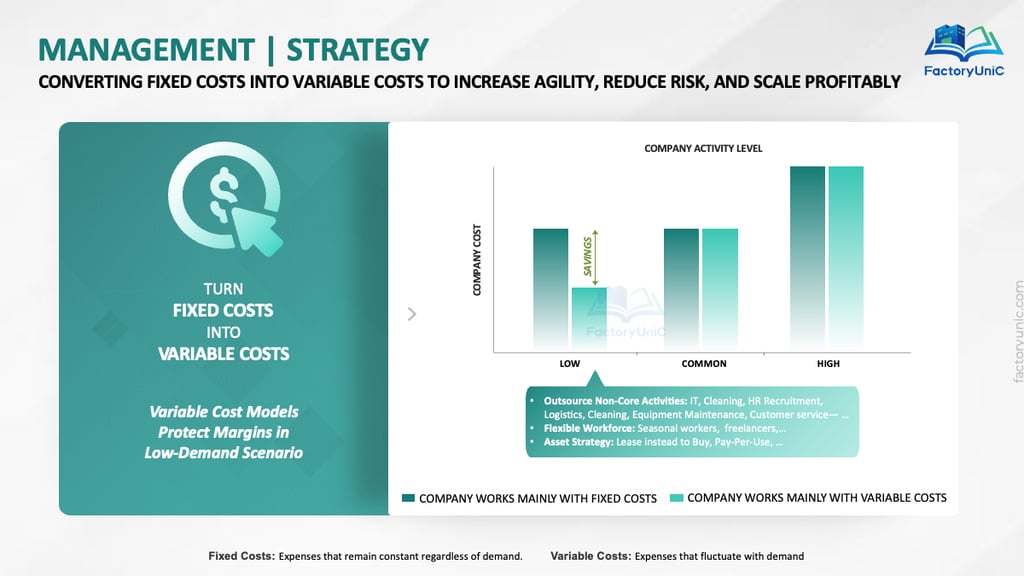
In the attached graph, we can see a clear representation of how changing fixed costs to variable is a strategic move that can lead to significant financial benefits.
How can Companies make the shift?
Outsourcing Non-Core Activities. Focusing on your core business while outsourcing non-essential functions—such as IT, logistics, cleaning, equipment and machinery maintenance, logistics, recruitment or customer service—allows you to pay for services only as they are needed. This strategy turns fixed costs, like internal team salaries, into variable costs tied to service usage.
Utilize Temporary Staffing & Freelancers. Instead of hiring full-time employees for every role, consider flexible staffing options, including temporary employees or freelance talent. This provides the flexibility to scale the workforce up or down based on current business needs.
Lease Instead of Buy & Implement "Pay-per-Use" Models. Whether it's office space, equipment, or technology, leasing allows your business to remain nimble, adapting quickly to new opportunities and challenges without heavy capital investment. Additionally, "Pay-per-Use" models for services or equipment enable you to pay only when you need resources, keeping costs aligned with your business activities.
The strategy of changing fixed costs to variable costs is not just about saving money. It's about gaining flexibility, scalability, and resilience. In an unpredictable market, this strategy could be the difference between thriving and merely surviving.
📫 If you're looking for manufacturers of high-tech products or you have any questions about this topic, please don’t hesitate to contact us at contact@factoryunic.com. We’ll be happy to assist you.
Management
Napoleon Hill
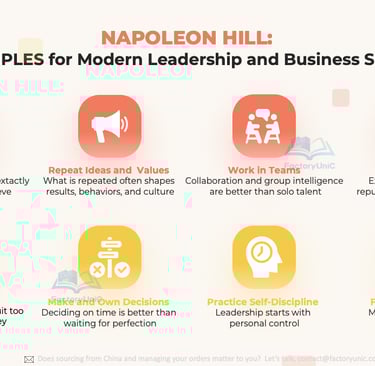
management - Napoleon Hill | Principles for Modern Leadership and Business Success
Napoleon Hill did not write only to motivate people. He created a clear system to help people achieve goals, lead others, and take action on purpose. His ideas are still useful today, especially in organizations where success depends on clear direction, good decisions, and teamwork.
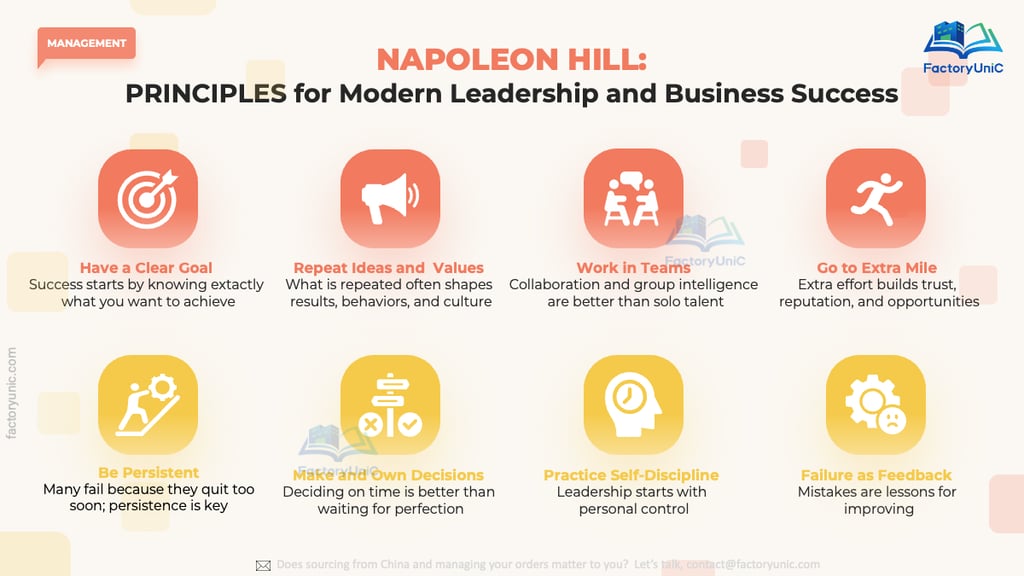
Below are eight core principles translated into clear leadership and business practices.
1. Clear and Definite Purpose: Direction Before Action.
Success starts with clarity. Without a defined objective, effort becomes scattered and ineffective. A vague goal produces vague results. In business, goals must be specific, measurable, time-bound, and owned. When leaders communicate purpose clearly, teams understand priorities, make better decisions, and align daily actions with strategic objectives.
2. Repetition and Autosuggestion: Culture Is Built by Consistency.
What is repeated strengthens belief and behavior. When people repeat goals and values, they begin to think and act in line with them. In organizations, culture is built by what leaders say and do again and again. What leaders repeat, and allow, becomes normal behavior for the team. What is repeated daily becomes part of the culture.
3. The Mastermind Principle: Collective Intelligence Wins.
Hill rejected the idea that success comes from one person alone. He believed that working with others makes everyone stronger. Today, strong leaders build teams where people with different skills work together. Teams that share ideas and responsibility usually perform better than individuals working alone.
4. Going the Extra Mile: Do More Than What Is Required.
Success often comes from doing more than what is asked. Extra effort builds trust and creates opportunities. People that go beyond basic expectations earn respect, loyalty, and a good reputation. Extra effort creates extra value.
5. Persistence and Resilience: Endurance Creates Advantage.
Persistence is the ability to keep going even when things are hard. Many plans fail not because they are bad, but because people give up too soon. Success often comes after difficulties.
6. Decision-Making: Speed with Responsibility
Successful people make decisions quickly and change them only when needed. Fear often causes people to delay decisions. In business, momentum matters. A timely, well-owned decision moves the organization forward. Waiting for perfection usually costs more than acting with discipline.
7. Self-Discipline: Lead Yourself First.
Leaders must control themselves before leading others. This includes emotions, time, and behavior. Teams do not follow instructions; they follow examples. A leader’s behavior sets the standard for the entire organization. Discipline at the top creates discipline throughout the system.
8. Failure as Feedback: Learning Is the Competitive Edge.
Failure is not the end unless you quit. Every mistake can teach something useful. Organizations and people that learn from mistakes improve faster and become stronger. Failure helps improve the plan, not destroy it. Failure is a lesson, not a stop sign.
📞 Sourcing from China and managing your orders matter to you? Let’s talk. contact@factoryunic.com


Management
Jim Rohn
management - Napoleon Hill | Principles for Modern Leadership and Business Success
“You are the average of the five people you spend the most time with,” a quote by Jim Rohn, delivers a simple yet powerful truth: your environment is shaping you every day. The people around you influence how you think, what you believe is possible, and the standards you choose to accept. Mindset, habits, ambition, and even confidence are contagious. When your circle is driven by growth, discipline, and solutions, your own level rises naturally. Choosing who you spend time with isn’t just a social choice, it’s a strategic decision about your future.
📞 Sourcing from China and managing your orders matter to you? Let’s talk. contact@factoryunic.com
Management
3 Powerful Quotes Every Manager Should Know
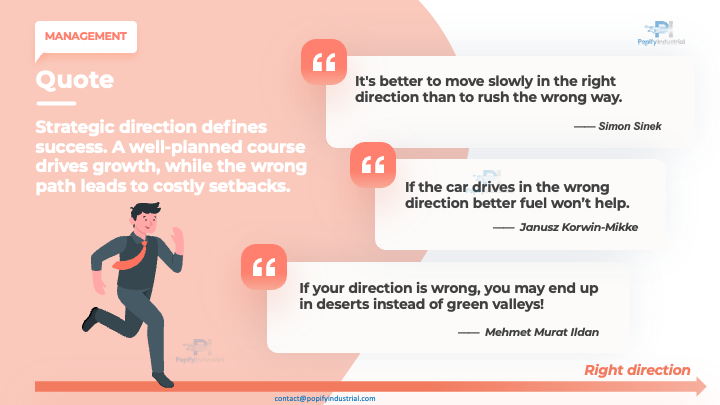
DIRECTION OVER SPEED: WHY STRATEGY MUST COME FIRST
Leaders often find themselves under immense pressure to deliver rapid results. Investors demand quick returns, competitors move aggressively, and market conditions shift unexpectedly.
In this race for success, one critical truth is often overlooked: Direction matters more than speed. Move fast on the wrong path, and you’re just accelerating failure.
The Cost of Moving in the Wrong Direction
Many companies invest heavily in scaling operations, launching new products, or entering new markets without ensuring that their fundamental strategy is sound. This “speed-first” mentality can be catastrophic. Take, for example, companies that expand globally without...
Please download the attached PDF or PPT to access the complete content.
Management
To be Successfull - Murphy´s Law
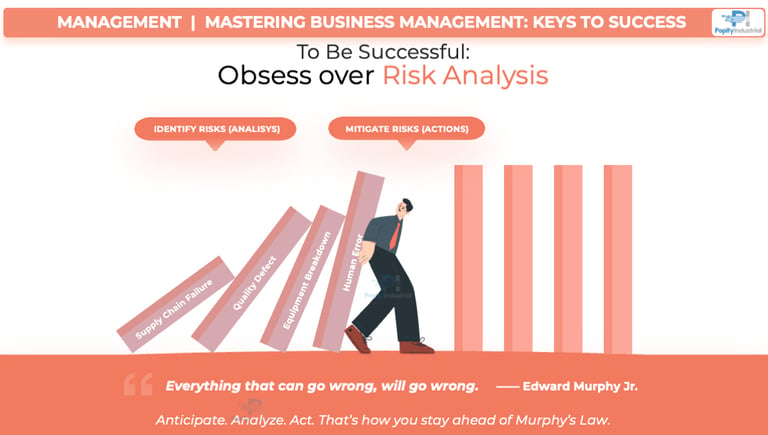
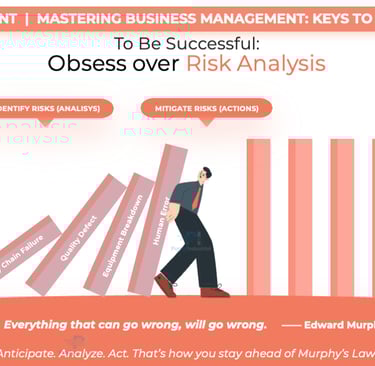
MURPHY’S LAW & RISK ANALYSIS: WHY YOU SHOULD OBSESS OVER IT
"Anything that can go wrong, will go wrong." — Murphy’s Law
This phrase isn’t just pessimism—it's a wake-up call for professionals in quality, operations, and business management. Murphy’s Law reminds us that failure is not a possibility; it’s a certainty—unless we’re prepared.
That’s why the key to success lies in obsessing over risk analysis.
Why Risk Analysis Matters
In business and manufacturing, problems often don’t come one at a time—they come like falling dominoes. If you’re not ready, one failure can trigger a chain reaction...
Please download the attached PDF or PPT to access the complete content.
Management
To be Successfull - Murphy´s Law
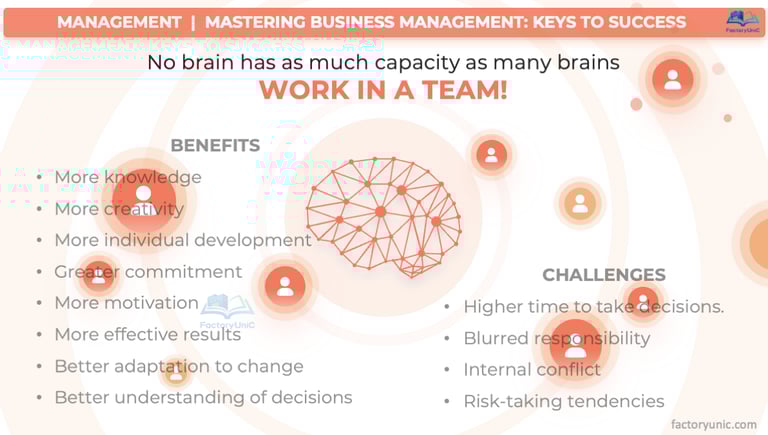
The Key to Industrial Success: Teamwork
In today’s increasingly complex and demanding industrial environment, teamwork has become one of the most valuable competencies within organizations. It is no longer enough to have technically skilled employees; what’s required now is genuine collaboration, coordination, and a collective mindset focused on achieving shared goals.
What is teamwork?
A team is formed when two or more people work together toward a common objective. It’s not simply about gathering individuals—it’s about creating synergy, where the outcome exceeds the sum of individual efforts.
Tangible Benefits of Teamwork...
Please download the attached PDF or PPT to access the complete content.
Management
Foster Multidisciplinary Teams
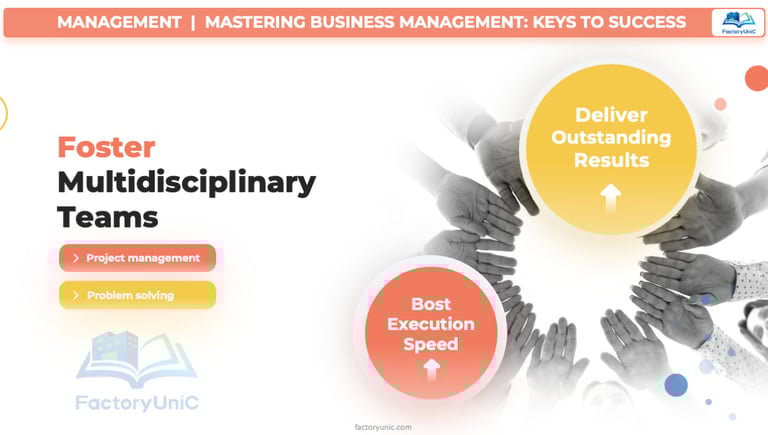
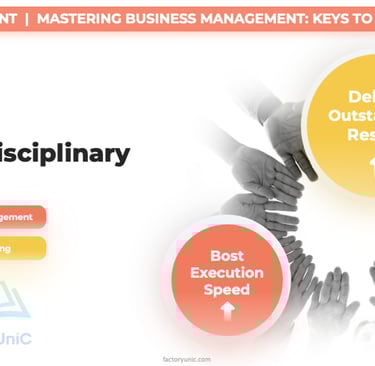
MULTIDISCIPLINARY TEAMS
Let’s be honest: if your business is still operating in silos, you’re burning time, money, and missing key opportunities. Multidisciplinary teams aren’t a buzzword. They’re the difference between businesses that merely cope—and those that lead the way.
What Exactly Is a Multidisciplinary Team?
It’s a team made up of people with different areas of expertise, all working together towards a clear objective.
They don’t clash—they complement each other.
They don’t hide behind their job descriptions—they collaborate and get things done.
Key Advantages
Different minds, better thinking: Bringing together varied perspectives means....
Please download the attached PDF or PPT to access the complete content.
Management
Task Prioritization (2 slides)
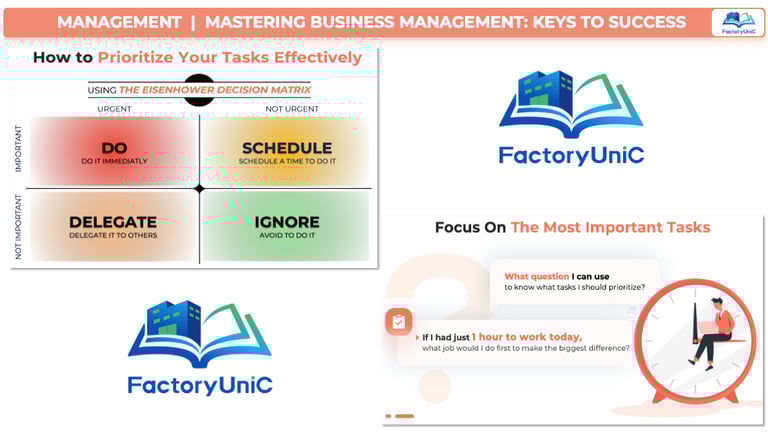
How to Define the Priority of Your Tasks: The Eisenhower Matrix
In our busy lives—whether at work, at home, or while managing multiple responsibilities—it's easy to feel overwhelmed by everything we have to do. But here’s the truth: not all tasks are equally important.
To work smarter and not just harder, one tool stands out for its clarity and simplicity: the Eisenhower Decision Matrix. This method helps you decide what to DO, what to PLAN, what to DELEGATE, and what to IGNORE.
Let’s break it down and learn how you can apply it starting today.
What is the Eisenhower Matrix?
The Eisenhower Matrix is a square divided into four quadrants based on two criteria...
Please download the attached PDF or PPT to access the complete content.
Management
Darwin´s sentences for Management
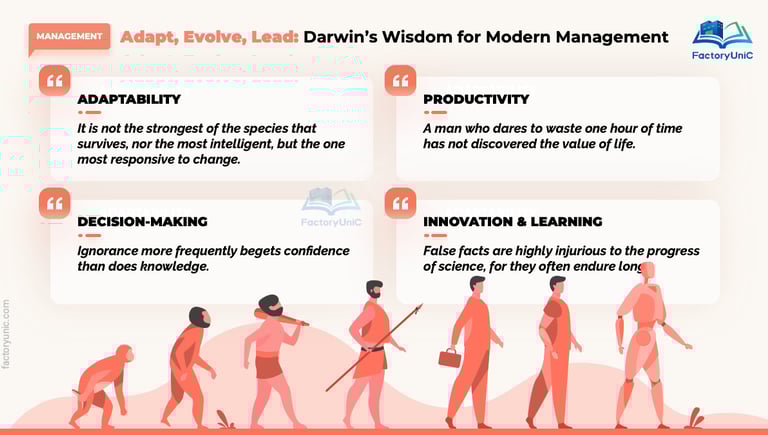
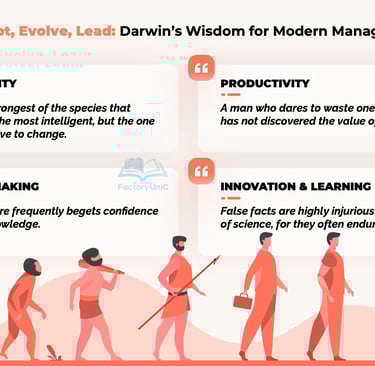
DARWIN IN BUSINESS: 4 LEADERSHIP LESSONS
Adaptability: The Strong Don’t Always Win
“It is not the strongest of the species that survives, nor the most intelligent, but the one most responsive to change.”
Everyone wants to be the “biggest” or “smartest.” But in the business world, that’s not how it works. The ones who adapt survive. The ones who don’t? They’re stuck in the past. The market moves fast—be ready to pivot or be left behind.
👉 Ask yourself: Is your business reacting quickly enough to change? Or are you hoping the world will wait for you?
Innovation: Question Everything
“False facts are highly...
Please download the attached PDF or PPT to access the complete content.
Management
Keep Moving: Power of Persistence
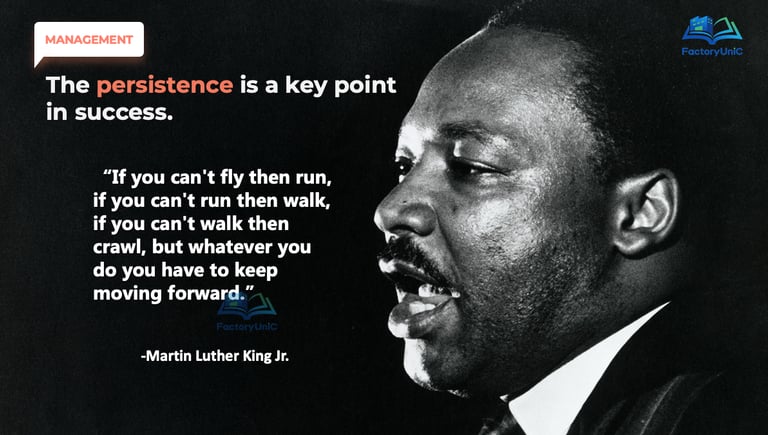
THE real success is built on persistence.
A powerful visual reminder of this comes from a quote by Martin Luther King Jr.:
"If you can't fly then run, if you can't run then walk, if you can't walk then crawl, but whatever you do you have to keep moving forward."
These words carry more than just motivational weight — they hold a philosophy of life and leadership that applies to every endeavor, from personal growth to organizational transformation.
Persistence is the ability to keep going despite obstacles, slow progress, or even repeated failures. It’s not flashy. It’s not immediate. But it is essential. In management, entrepreneurship, innovation, and change leadership, persistence is often the difference between vision and....
Please download the attached PDF or PPT to access the complete content.
Management
Sales - KPIs
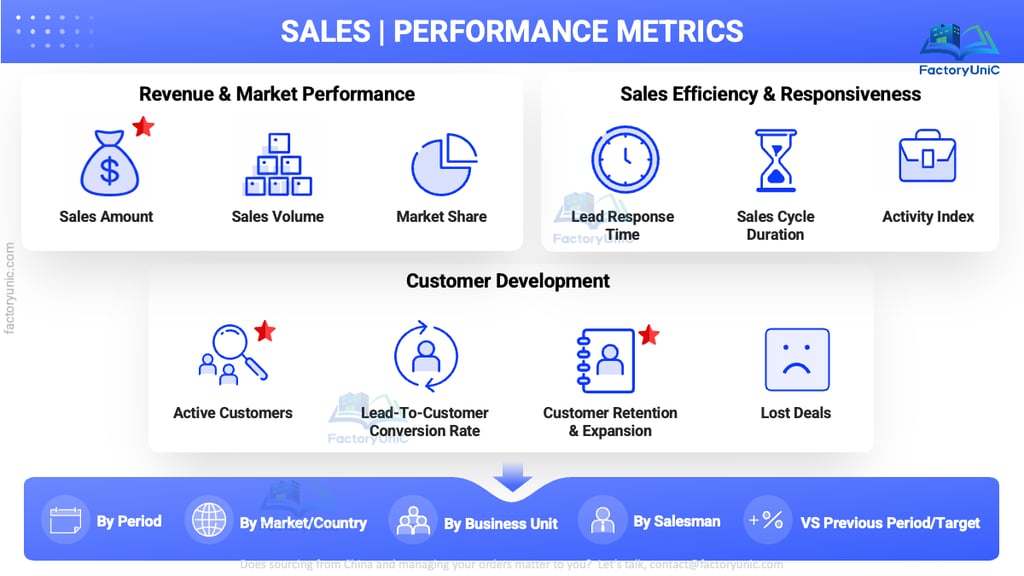
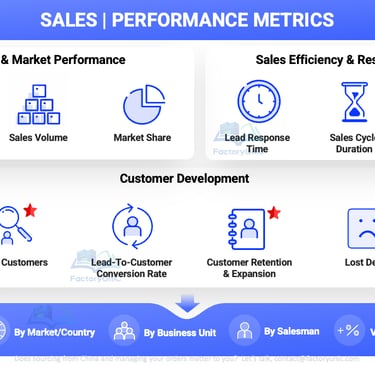
management | SALES - PERFORMANCE METRICS
Revenue & Market Performance
Revenue (Sales Amount). Total turnover and gross margin.
Units Sold (Sales Volume)
Market Share. % within target segments (automotive, logistics, pharma, etc.).
Sales Efficiency & Responsiveness
Lead Response Time。 Average time to first qualified contact.
Sales Cycle Duration。 Average time from lead to purchase order.
Activity Index。 Visits, demos, layouts, quotations issued.
Customer Development
Active Customers。 By customer level, by industry.
Lead-to-Customer Conversion Rate。 % of opportunities converted.
Customer Retention & Expansion。 Repeat purchases.
Risk & Lost Opportunities
Lost Deals Analysis. Due price, delivery time, technical requirements outside our solution scope.
Segment Analysis
By period
By market / country
By business unit
By sales manager
Vs previous period (%)
Vs target (%)
📞 Sourcing from China and managing your orders matter to you? Let’s talk. contact@factoryunic.com